
Oil, Daily Life, and the Road Back to Stability

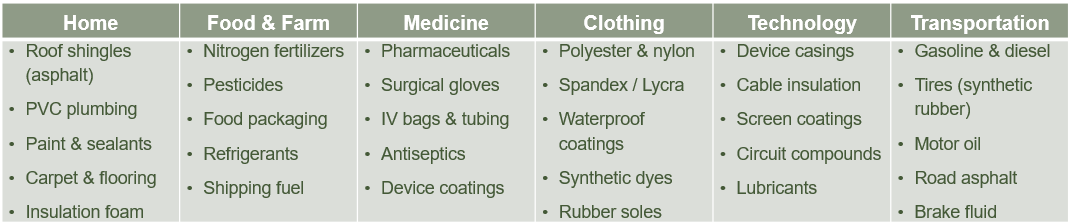
Pick up almost any object near you and trace it back far enough. There’s a very good chance petroleum played a role in making it, packaging it, growing it, or delivering it. Oil is not simply fuel. It is the raw material from which modern civilization is constructed, present in more than 6,000 products that span medicine, clothing, food, technology, and shelter.
We have been living through a global shock since the United States and Israel launched strikes against Iran in late February 2026, triggering one of the most significant energy disruptions in decades. Crude oil surged above $100 per barrel—briefly approaching $120—as traffic through the Strait of Hormuz, the narrow waterway carrying roughly one-fifth of all global petroleum, ground nearly to a halt. The pain is real and immediate. But understanding what is truly at stake—and why resolution will matter so profoundly to household finances—begins with appreciating how thoroughly oil is woven into daily life.
The Invisible Ingredient in Everything You Touch
The nylon and polyester in your wardrobe. The fertilizers that helped grow the food on your dinner table. The plastic packaging around it. The antiseptics and IV bags in your medicine cabinet. The paint on your walls, the shingles on your roof, the asphalt on the street outside, and all the products in the table below—all petroleum-derived products, as invisible in our daily consciousness as air, until their price suddenly rises.
How a Strait Shakes a Family Budget
The Strait of Hormuz—just 21 nautical miles at its narrowest—carries roughly one-fifth of the world’s entire petroleum supply every day. When military strikes disrupted traffic through this single chokepoint, the effect rippled almost immediately through every layer of the economy.

Higher diesel prices—now approaching $5 per gallon—function as a hidden tax on every product that moves by truck, train, or ship. Fertilizer costs have risen sharply, threatening to push food prices higher in the months ahead. And an inflation-constrained Federal Reserve has been forced to defer the interest rate cuts that homebuyers and small business borrowers had been counting on.
Energy price stability is one of the most powerful—and least discussed—pillars of family financial security. When it is disrupted, every American family feels it.
The compound effect on household finances is real: Higher fuel bills, higher grocery costs, and delayed relief on borrowing costs, all arriving at once. For families already managing tight budgets, the pressure is significant.
The Outlook: Why Resolution Means a Powerful Tailwind
History offers unambiguous guidance: Every major geopolitical oil disruption of the past half century has eventually resolved, and energy markets have normalized. The 1973 embargo, the 1979 Iranian Revolution, and the 1991 Gulf War all produced painful spikes, and each was followed by a return to stability and lower prices. The current crisis appears to follow the same pattern.
The Road Back—Stabilizing Forces
Multiple powerful factors are already aligned to support recovery. Once the current geopolitical uncertainty resolves, the structural conditions for meaningful price relief are firmly in place:
- Organization of the Petroleum Exporting Countries (OPEC+) holds significant spare capacity and is ready to mobilize quickly
- U.S. shale production is near historic highs—a buffer unavailable in prior crises
- International Energy Agency (IEA) coordinated its largest-ever strategic oil reserve release of more than 400 million barrels
- Pre-war forecasts projected oil potentially settling in the mid-$60s by year-end
- Lower oil will ease fertilizer and food costs downstream for families
- Inflation relief gives the Fed room to resume interest rate cuts
- Business investment and hiring—suppressed by uncertainty—will rebound
- Alternative energy investment is accelerating, improving long-term security
When stability returns, the economic benefits will be felt broadly and quickly. Lower gas prices. Easing grocery bills. A Federal Reserve positioned to cut rates, reducing mortgage and borrowing costs. Renewed business confidence and hiring. For American families, this is not an abstraction—it is real dollars back in real budgets.
The 1990s—the decade that followed the Gulf War’s resolution—were characterized in part by relatively low and stable energy prices that contributed to one of the longest periods of sustained economic expansion in American history. The structural conditions today, including American energy independence through domestic shale production, are arguably more favorable.
Every oil shock in modern history has ended. And when it ends, the economic tailwind is as real and broadly felt as the headwind that preceded it.
Final Thoughts
At Wealth Enhancement, we believe that understanding the macroeconomic forces shaping today’s environment is fundamental to sound financial planning. The current disruption, painful as it is, does not alter the long-term trajectory—it represents a temporary detour.
The destination remains a more stable, affordable energy environment and the family financial security that comes with it. We remain focused on helping you navigate the present with clarity and position you for the opportunity ahead.
As always, if you have any questions or concerns about how this current crisis may impact your financial plan, please don’t hesitate to reach out.
This information is not intended as a recommendation. The opinions are subject to change at any time and no forecasts can be guaranteed. Investment decisions should always be made based on an investor’s specific circumstances. Investing involves risk, including possible loss of principal.
2026-11490
<a href=”/blog?keyword=&field_category%5B11%5D=11” class=”custom-taxonomy-link”>Financial Planning</a>

Insights
Related resources for you
Get the latest wealth management tips and trends from our library of articles and resources.


